In laparoscopic surgery, the precision of electrosurgical instruments is as important as surgical accuracy. The instrument plays an important role in maintaining controlled bleeding, visibility and protecting adjacent tissues.
A minor bleeding during laparoscopic gynecologic procedure can disrupt the surgical area, leading to complications in tissue identification, requiring an urgent need to adopt additional steps for clear visibility. When operating during confined anatomical areas, surgeons maintain consistent control throughout the process of dissection and coagulation in targeted areas.
To cater to this prevailing problem laparoscopic bipolar forceps is used. As it combines tissue grasping, dissection and controlled coagulation, giving surgeons control over managing delicate tissue, supporting hemostasis effectively.
Disposable Laparoscopic Bipolar Forceps: Combining Grasping, Dissection, and Coagulation
The single use disposable Laparoscopic bipolar forceps designed by U.S. Surgitech offers precise tissue Grasping, controlled dissection and targeted coagulation.
Precise Tissue Grasping
This Bipolar Forceps provides stability, accessibility and effective tissue manipulation during delicate procedures.
Controlled Dissection
Using the right dissecting forceps help with tissue separation, traction and provides access to the targeted area of treatment in a minimally invasive procedure.
Targeted Coagulation
To provide localized hemostasis, bipolar energy is applied to tissue that is in between the jaws of the forceps
These features make the bipolar forceps a crucial category in operating instruments used for procedures that require precision in tissue management and bleeding control.
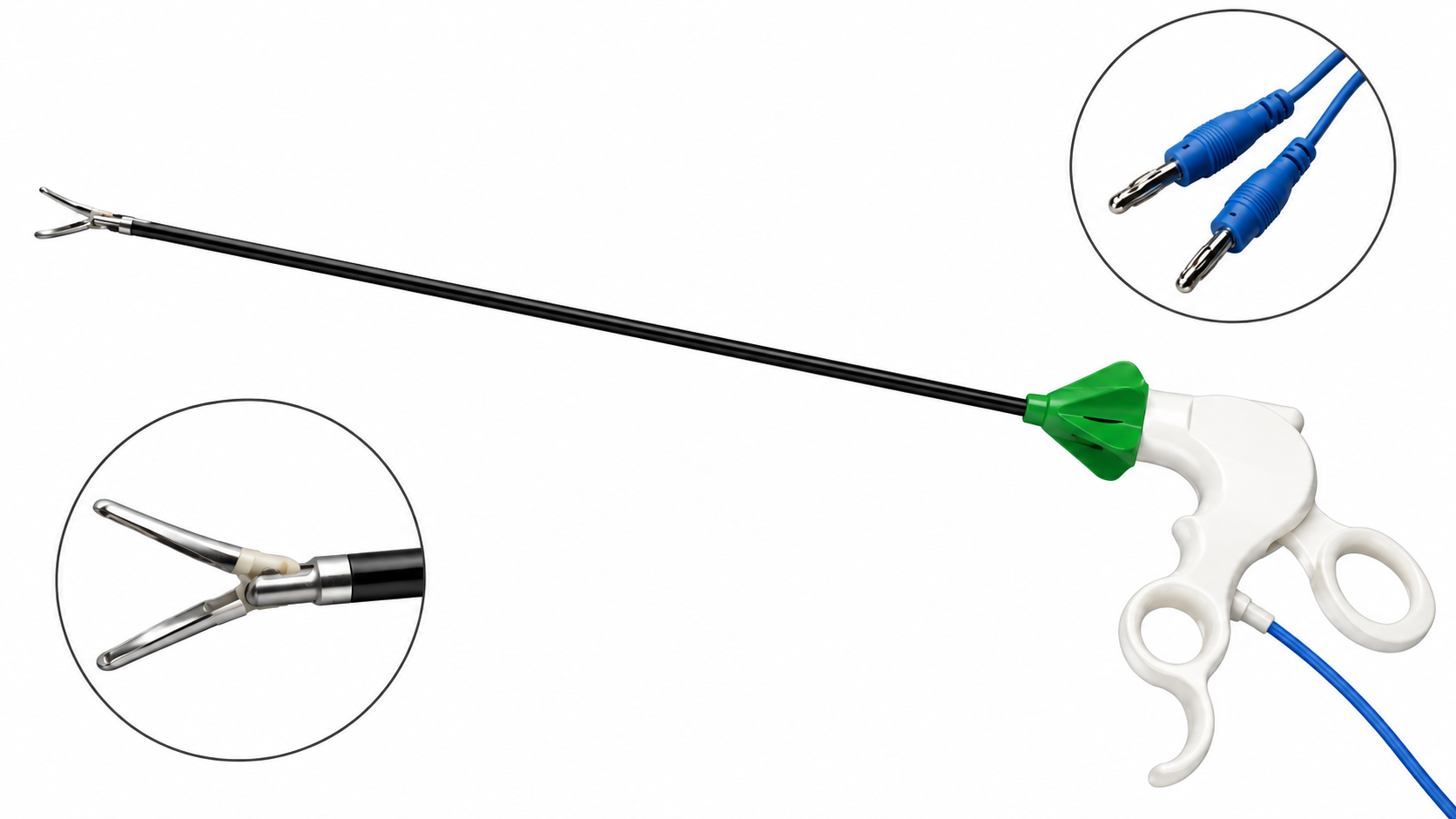
The Challenge of Bleeding During Gynecologic Laparoscopic Surgery
In gynecologic laparoscopic surgeries during tissue dissection, several challenges are experienced by the surgeons. Some are as follows,
- Reduced Surgical Visibility due to blood release during tissue dissection
- The surgical workflow may get interrupted as the surgeon then needs to perform irrigation or suction to achieve hemostasis.
- The instruments need to be handled carefully by the surgeons while dissecting the delicate tissues to protect the adjacent structures.
- There is a high risk of thermal injury to surrounding tissues due to insulation failure in reusable laparoscopic instruments.
Reliable instruments and appropriate technique are therefore required for effective laparoscopic hemostasis.
The Surgical precision and safety offered by Bipolar devices
The Bipolar electrosurgical instruments follow a safer path where the current flows from the generator to the jaws holding the tissue. The current flows from one jaw to the held tissue, performs the desired task and flows back to the other jaw, keeping controlled power for improved safety.
Unlike monopolar devices the rest of the body is completely secure from the electrical passage. Bipolar forceps is all about safety and precision, making it ideal option for delicate areas during surgery.
Key Features and Clinical Advantages of Bipolar Forceps
Localized Bipolar Energy Delivery
Bipolar forceps provide patient safety by transmitting the energy back and forth between the jaws only for targeted coagulation, keeping the surrounding tissues from unnecessary exposure.
A design that supports clinical precision
When selecting the right electrosurgical instrument, the intended clinical use, jaw configuration, grasping performance, energy control, generator compatibility, and single use or sterilization should be considered and evaluated. View Bipolar Forceps.
Support for Effective Hemostasis
The laparoscopic Bipolar forceps is designed to assist the surgeons by maintaining surgical visibility through coagulation to control bleeding.
Sterile, Single-Use Convenience
The single use Laparoscopic Bipolar forceps eliminates the need for reprocessing, securing patients from unwanted surgical site infections, that are associated with inadequate reusable laparoscopic instruments reprocessing.
Compatibility With Minimally Invasive Surgical Workflows
The single use laparoscopic bipolar forceps provides surgical control during gynecologic procedures.
Multifunctional Instrument Design
The need for repeated instrument exchanges during relevant procedures when a single instrument can perform grasping, dissecting and coagulation.
Frequently Asked Questions
1. What is the difference between monopolar and bipolar electrosurgical instruments?
In monopolar electrosurgical instruments the current flows from the generator and flows through the electrosurgical instrument and passes through the patient’s tissue performing its intended task and reaches to the grounding pad. Monopolar electrodes are used in vast variety of procedures, offers faster tissue cutting due to higher power capability, and are comparatively lower at cost.
The Bipolar electrosurgical instruments follow a safer path where the current flows from the generator and performs its task to the only grasped tissue in between the jaws of the bipolar forceps and immediately shifts to the other jaw of the laparoscopic instrument, offering controlled power for improved safety. The rest of the body is completely secure from the electrical passage. Bipolar forceps is all about safety and precision, making it ideal option for delicate areas during surgery.
2. What are the clinical implications of Bipolar Forceps?
Bipolar Forceps are used in a broader range of surgeries that require delicate handling. These procedures include Neurosurgery, ENT procedures, Gynecologic surgeries, ophthalmic procedures, minimally invasive surgeries, pediatric and procedures involving the handling of delicate soft tissue.
3. Why is coagulation important during laparoscopic surgery?
Coagulation during laparoscopic procedures controls bleeding and keeps surgical visibility of the targeted anatomical area.
4. What are the advantages of disposable laparoscopic bipolar forceps?
The single use disposable laparoscopic bipolar forceps provides protection against surgical site infections. Moreover, it provides an efficient workflow by eliminating the need for cleaning, sterilization and maintenance in between every procedure. The repeated sterilization can cause insulation failure leading to thermal burns of tissues.
5. Can bipolar forceps reduce thermal injury during surgery?
Bipolar forceps localize electrical current between the instrument’s electrodes, which can help limit unwanted energy distribution. However, thermal injury remains possible, and safe operation depends on correct surgical technique, settings, and activation duration.
6. What surgical procedures commonly use bipolar forceps?
Bipolar forceps are used in various minimally invasive procedures, including gynecologic laparoscopic surgery and selected general surgical procedures, when tissue manipulation and coagulation are required. Actual applications depend on the device’s indications for use.
7. How to choose the right Surgical Laparoscopic Instruments?
When selecting the right electrosurgical instrument, the intended clinical use, jaw configuration, grasping performance, energy control, generator compatibility, and single use or sterilization should be considered and evaluated. View Bipolar Forceps