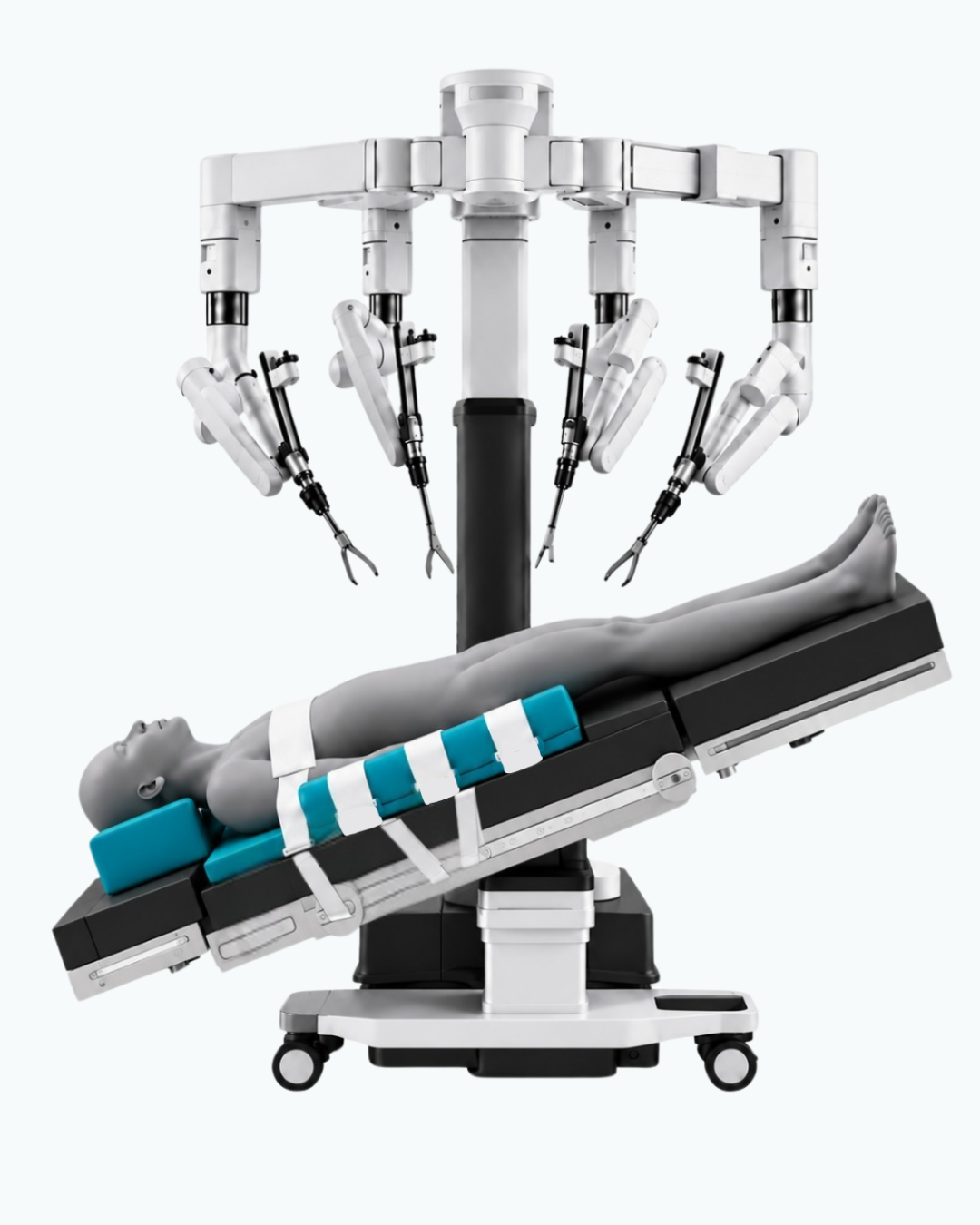
During steep trendelenburg positioning, the gravity pulls the patient downwards, which can reposition the patient from the desired position of surgery. In robotic surgeries, once the patient is docked, the OR team is left with less room to reach out and readjust the patient positioning set up. This makes stable and secure patient positioning in robotic surgeries particularly very important.
The OR team needs to assess the patient slippage chances in various positions, the pressure injuries that could happen due to lack of positioning accessories and poor patient positioning set up. AORN guidance on positioning injuries
What is the difference between Trendelenburg and reverse Trendelenburg?
The Trendelenburg position tilts the operating table so the patient’s head is lower than their feet. Gravity helps move bowel away from the pelvis, improving exposure for procedures such as robotic prostatectomy.
The reverse Trendelenburg position raises the head above the feet and can improve exposure in upper abdominal procedures such as robotic hiatal hernia repair. The direction of tilt also changes where the patient may slide and which contact points need attention. Robotic prostatectomy study · Robotic hiatal hernia repair technique · International Pressure Injury Guideline
Why does steep Trendelenburg increase positioning risk?
In steep trendeleburg positioning due to the head down tilt and the body positioned towards the steeper end can cause patient slippage leading to skin shearing injury. One of the important aspects in patient positioning is the way the patient is secured. The Association of Perioperative Registered Nurses (AORN) recommends not using shoulder braces to protect against brachial plexus. In the head down tilt in Steep Trendelenburg positioning the patients can experience airway pressures due to reduced lung compliance.
(Sources: Robotic prostatectomy ventilation trial, Robotic hysterectomy study)
How can OR teams support pressure injury prevention?
To highlight pressure injury points, identify the areas where there will be heavy load of the body. The international Pressure Injury Guidelines therefore recommends to use surface areas where the body weight is equally distributed avoiding any pressure points to be compromised. (Source: International Pressure Injury Guideline)
In Trendelenburg positioning, the shoulders and shoulder blades require protection against pressure. In reverse trendelenburg positioning, positioning accessories (https://ussurgitech.com/surgyfoam-positioning-accessories/) that provides protection against pressure injuries should be used.
Pressure Injury Prevention in Robotic Procedures
To avoid pressure injuries in robotic procedures and the hassle of redocking the OR team should assess the pressure injury points as per the patient positioning and the length of the procedure. This includes strapping the patient and using pads with antiskid feature for stronger stability and using patient positioning accessories that provides protection for better arm alignment, provide support to leg and any points of contact. (Source: AORN guidance on preoperative briefing, International Pressure Injury Guideline)
What should OR teams look for in patient positioning devices?
The OR team should consider the following points before considering a patient positioning device,
- Evaluate the patient positioning pad.
- The patient positioning pad should come along with straps and an anti-skid feature that are compatible with the Robotic bed railing.
- The setup should limit the patient movement after securement.
- The design of the pad should be able to equally distribute the weight of the patient, and provides access to the operative field.
- Use patient positioning accessories that support arms, legs and other vulnerable pressure points.
The SurgyPad™ Patient Positioning System from U.S. Surgitech is a single-use option for robotic and laparoscopic procedures. The Universal SurgyPad includes integrated adjustable arm protectors, a lift sheet, a body strap, and a perineal cutout. Its six-strap system anchors the pad to the table. For intended positions and setup details, see the instructions for the specific model.
Frequently Asked Questions
What can help reduce patient sliding in Trendelenburg?
Using patient positioning pads that come along with straps and an antiskid feature increases patient stability. Adding a body strap over the abdominal area offers additional securement.
Can a surgical pad help with pressure injury prevention?
A surgical pad designed to redistribute pressure can support a broader prevention plan.
That plan also accounts for the patient’s slippage risk, pressure from prolong procedures and body positioning. View SurgyPad
Are the straps of all patient positioning pads compatible with the Robotic Surgical Bed?
Not all but some patient positioning pads come along with straps that are compatible with the robotic surgical bed. Such as Universal SurgyPad of U.S. Surgitech.